

Ah, that feeling of contributing to the 6th mass extinction while saving the monarchs.
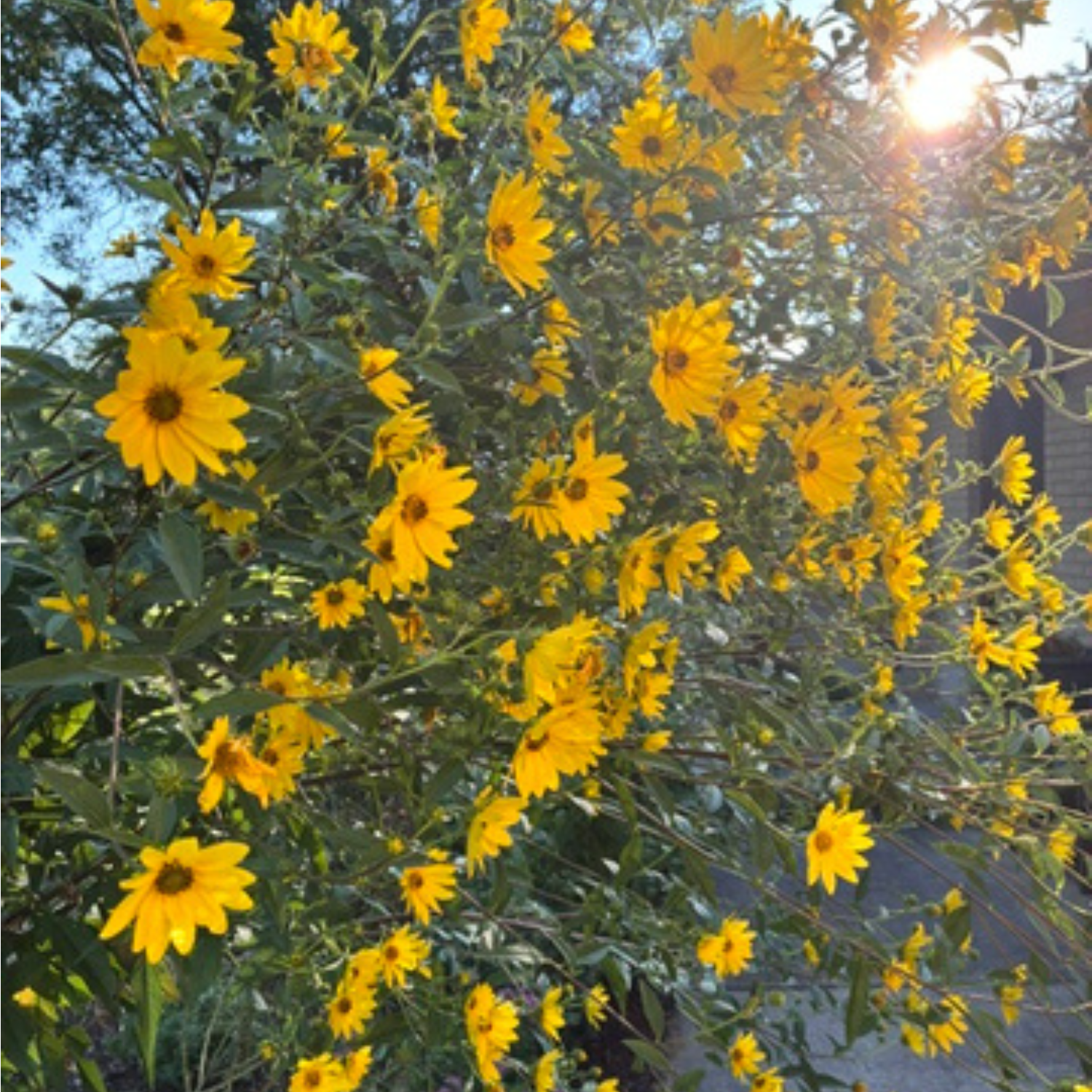
The native prairie sunflowers that tower over our front walk.
I’m not a doomer, but I did feel pessimistic last month. It’s hard to imagine a bright future when eating fresh produce poisons our guts; when playing outside poisons our lungs; when the rising tide of AI and its terrible freshwater input make headlines.
My son, the animal lover, spent the first two weeks of July tracking the progress of mourning dove chicks sheltering in front of our home. We set limits to protect him from the smoke: “Ok, go take a look but come right back inside.” While he peeked, I Googled Impact of wildfire smoke on wildlife. The unasked-for but unavoidable AI-powered response surfaced a grim story.
We longed for a taste of the season, but skipped traditional summer salads to avoid cyclospora. Instead, we salted tomatoes from our garden. It did the trick, so long as we averted our eyes from the tightly shut windows where a wrong-looking orange ball of sun burned dimly above the smoke layer. Our gluttonous air conditioner hummed with energy just outside.
They say that when it comes to climate change, individuals can’t make much difference. It’s about companies and policies and systems. That’s probably true. But it’s also true that only ten percent of us are responsible for a vast majority of what’s happening to the globe. At least, that’s what AI told me as it drained another gallon of freshwater.
When the AQI improved from Hazardous to just plain Unhealthy, I ventured out to water my garden.
This garden, it’s been a bit like the AI boom: years of quiet toil and experimentation. Then… Boom. A twelve foot tall native sunflower; boneset as big as me; coneflowers the size of toddlers; wild, wiry blazing star. As the colloquialism says: “They sleep, they creep, and then they leap.” Damn if these plants didn’t leap this summer.
Through the haze, a few recognizably orange and black butterflies ping-ponged between plants. My son, the animal lover, had alerted us to a “callerpilter” discovered during his morning bird check and, sure enough, an enormously fat baby monarch munched its way through the milkweed.
I navigated my hose carefully around the monarchs, baby doves, and benevolent hornets, but didn’t notice the goldfinches hiding between cosmos until they exploded away with angry chatter.
I retreated back into the artificially cooled house with itching eyes and throat to look up whether goldfinches like cosmos. The AI competing with my garden for water assured me they love it.
The smoke cleared weeks ago. We still avoid lettuce and raspberries, but at least we sleep with open windows and breathe the lake air.
My son, the animal lover, wished the birds well as they took to the ground, then the nearby tree, then the open sky. He has found both a chrysalis and a toad. There are more “good” bugs in my garden than I imagined possible. The butterflies and finches are frequent visitors, along with hummingbirds, gold-digger wasps, katydids. Did you know that when there are this many diverse flying things in your small patch of land you won’t struggle with aphids? The good bugs eat them up. AI sipped a bit of the Great Lakes and told me that.